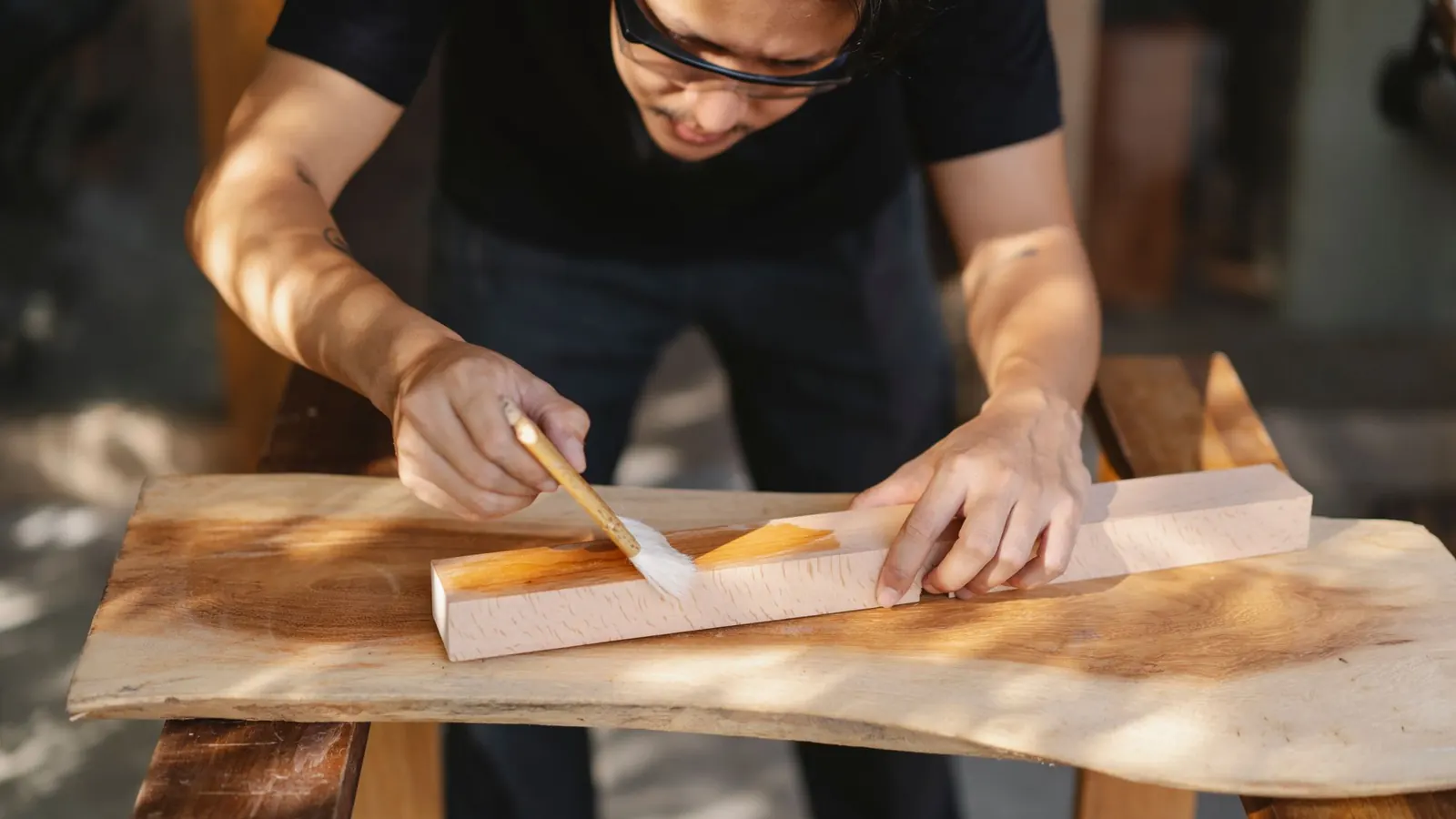
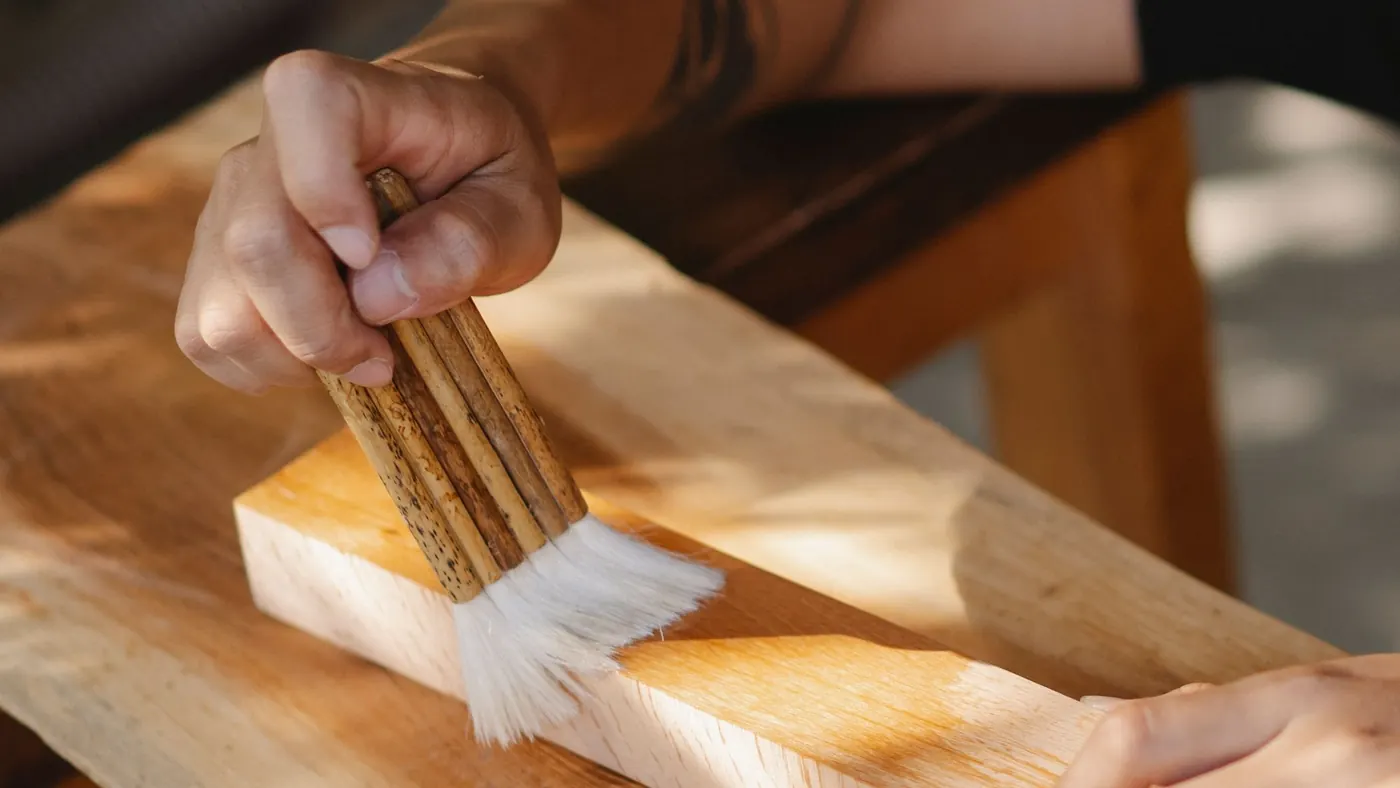
Stain and finish are two different jobs
A wood stain is a dye or pigment carried in water, spirit or oil. It soaks into the surface and changes the colour while leaving the grain visible. It offers almost no protection on its own. A finish is the clear coat over the top: varnish, lacquer, or oil. It is the finish that resists water, scuffs and dirt. Some products combine the two (tinted varnishes, coloured hardwax oils) and they are useful, but understanding them as two jobs makes every choice clearer.
Which timber you have changes everything
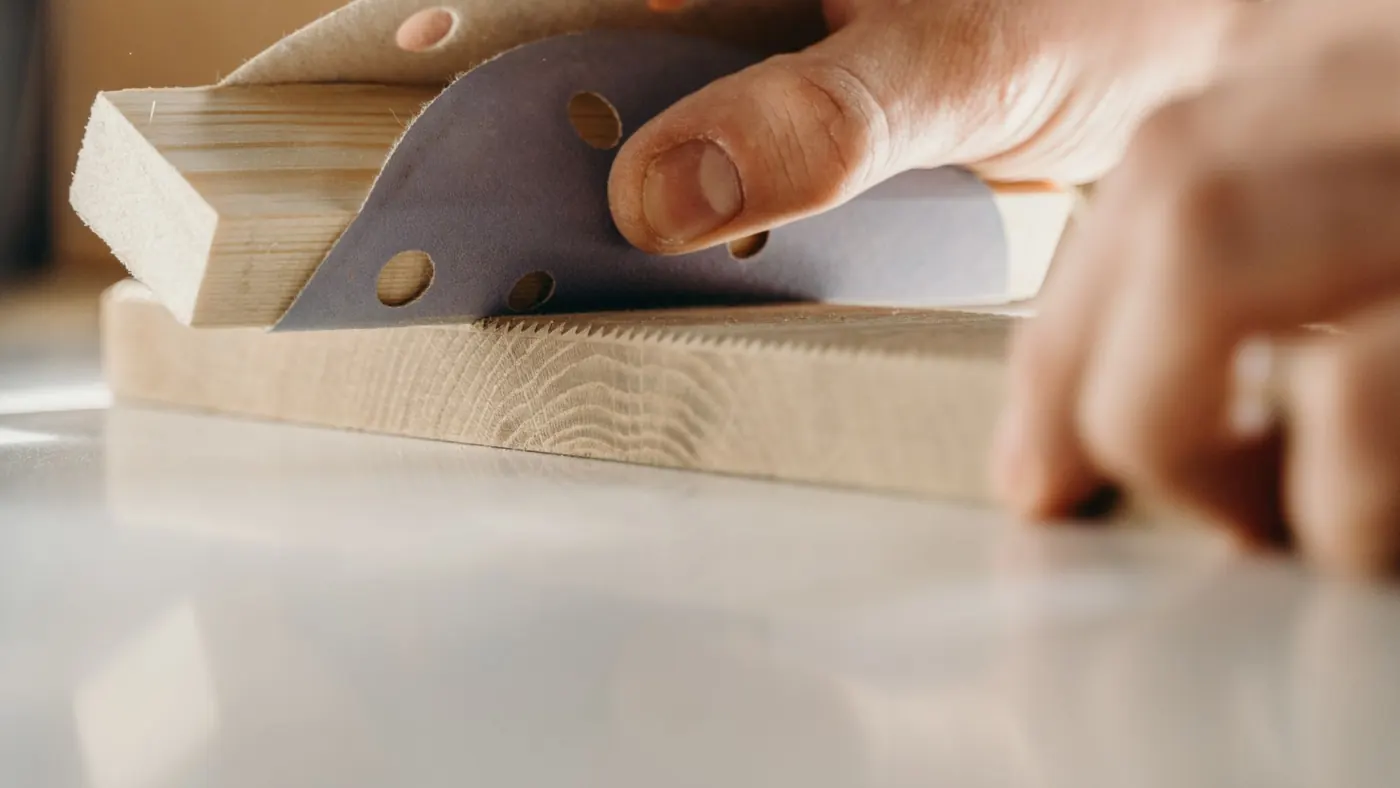
London houses built before 1950 are mostly pine: floorboards, doors, skirting, staircase treads and spindles. Pine takes stain unevenly, going blotchy where the grain changes, so it needs a pre-stain conditioner or a gel stain and a light hand. Oak, common in 1930s staircases and front doors in the outer boroughs, takes stain evenly and often looks best with a clear finish and no stain at all. Newer engineered oak floors are already finished and usually want a matching lacquer or oil rather than a colour change.
Floors: lacquer for wear, oil for looks
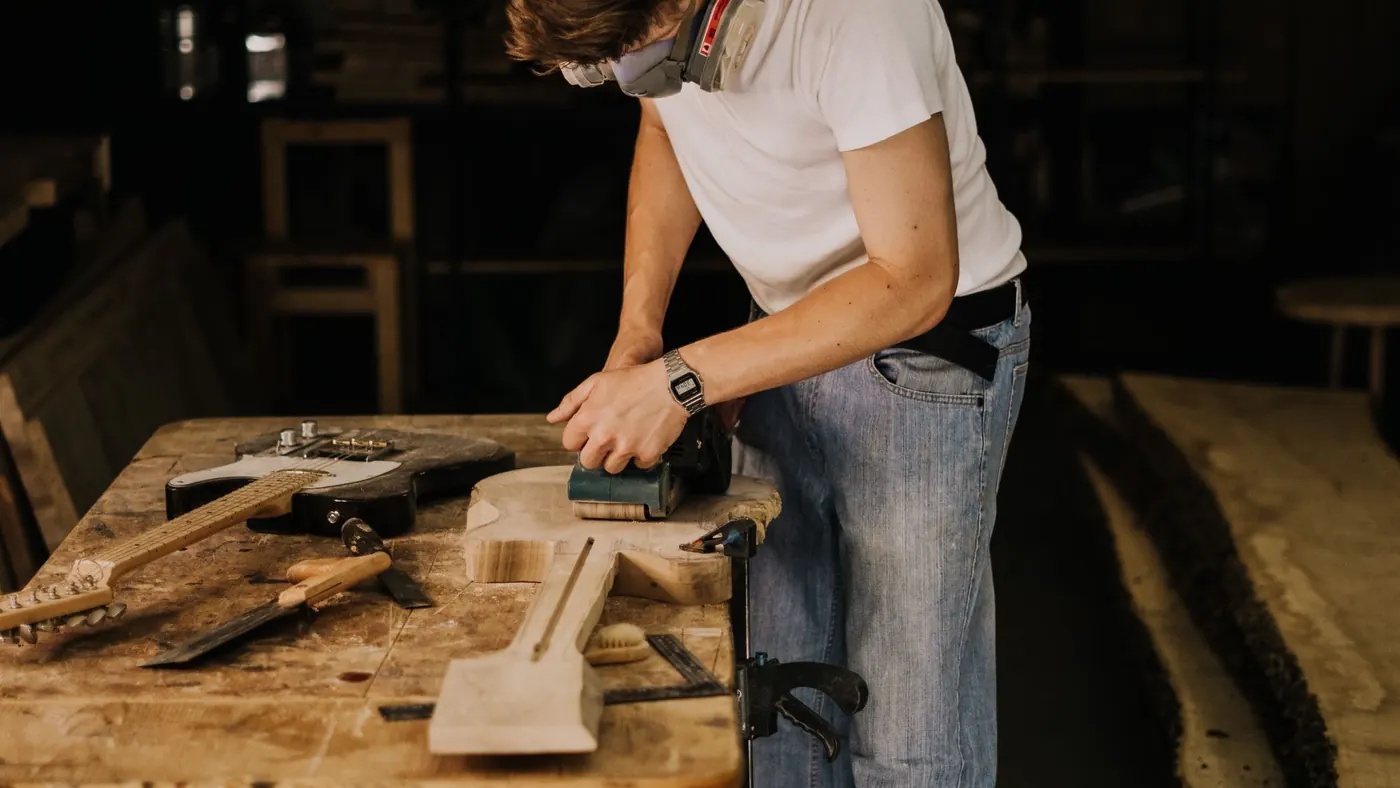
A hallway floor with a dog, a pushchair and a front door wants a water-based polyurethane lacquer: three coats, hard-wearing, clear, no yellowing. It will eventually wear through and need a full re-sand, but that is years away. A living room or bedroom floor can take a hardwax oil, which sits in the grain, looks softer and more natural, and can be spot repaired with a wipe of more oil. Both start with the same sanding, which is where the floor staining process begins.
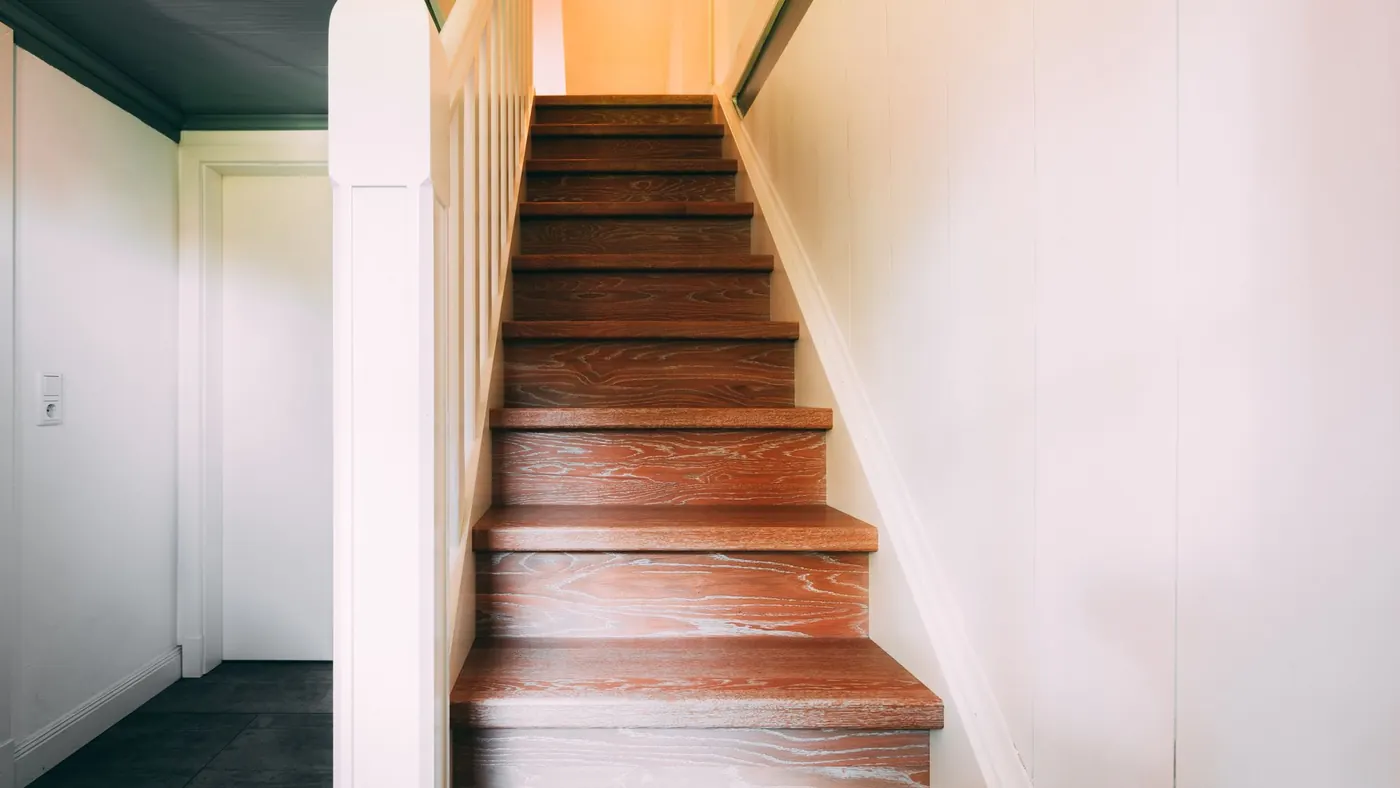
Stairs: the busiest timber in the house
Stair treads take more wear than any floor, concentrated in a strip down the middle. They want the hardest finish you can get, usually a two-pack or high-traffic water-based lacquer in three or four coats, with a non-slip additive if the stairs are steep. Handrails are held every day and look best in an oil or a satin varnish that feels like wood rather than plastic. Spindles and strings are often painted rather than stained on Victorian stairs, which the varnishing service handles in the same job.
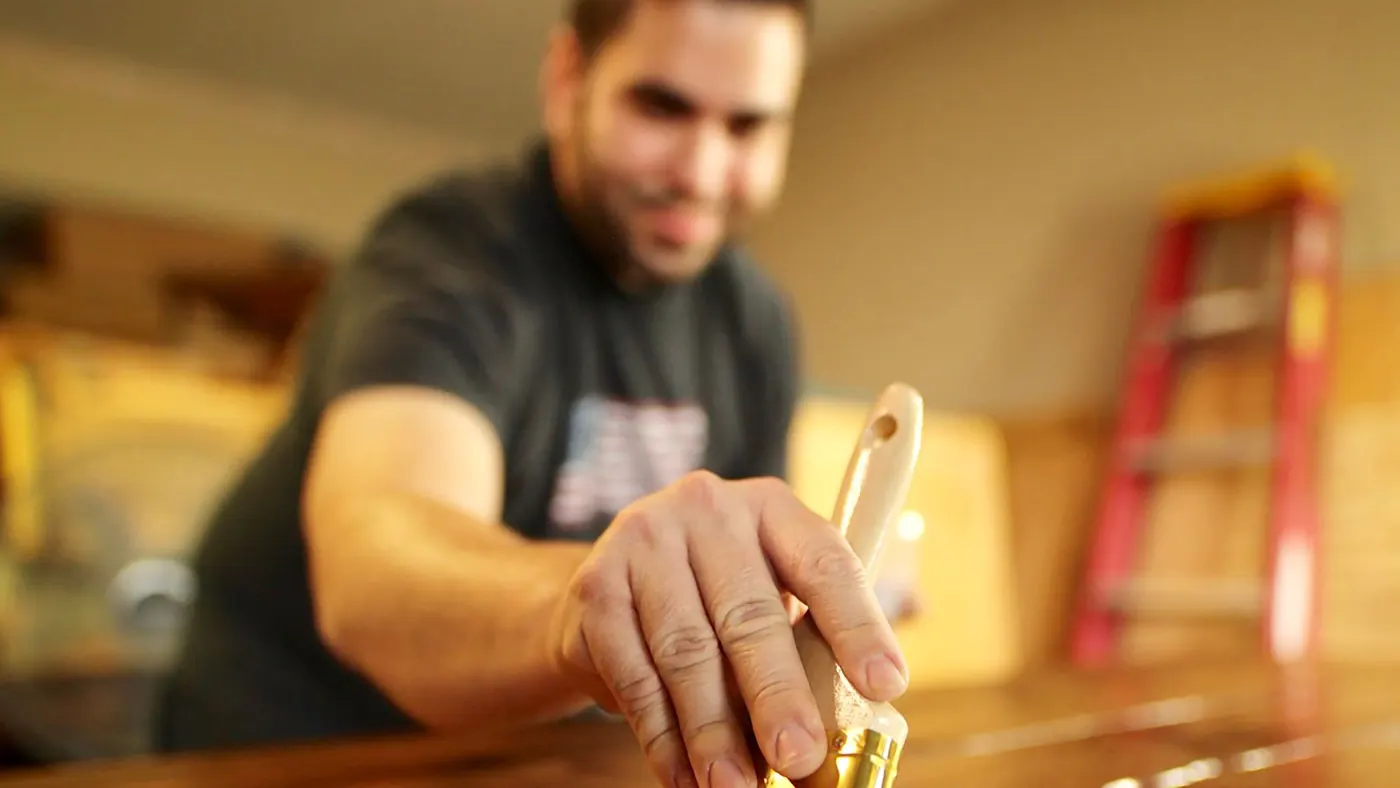
Doors and joinery: sheen and repairability
Stripped Victorian pine doors look right in a satin oil-based varnish, which warms and ambers slightly over the years. A modern flush oak door looks right in a clear matt water-based lacquer that stays pale. For an exterior front door in oak, a UV-resistant exterior oil or a yacht varnish is needed; ordinary interior varnish will crack and peel in a London winter. Whatever the product, doors are best finished off their hinges, laid flat, so the coats do not run.
How each finish is applied
| Finish | Coats | Recoat time | Usable |
|---|---|---|---|
| Water-based lacquer | 3 (4 on stairs) | 2 to 4 hours | Next day in socks; furniture after 3 days |
| Oil-based varnish | 2 to 3 | Overnight | 2 days; hardens over a week |
| Hardwax oil | 2 thin | 8 to 12 hours | Next day; full cure 7 to 10 days |
| Exterior stain-preserver | 2 | 4 to 6 hours | When dry; recoat every 2 to 4 years |
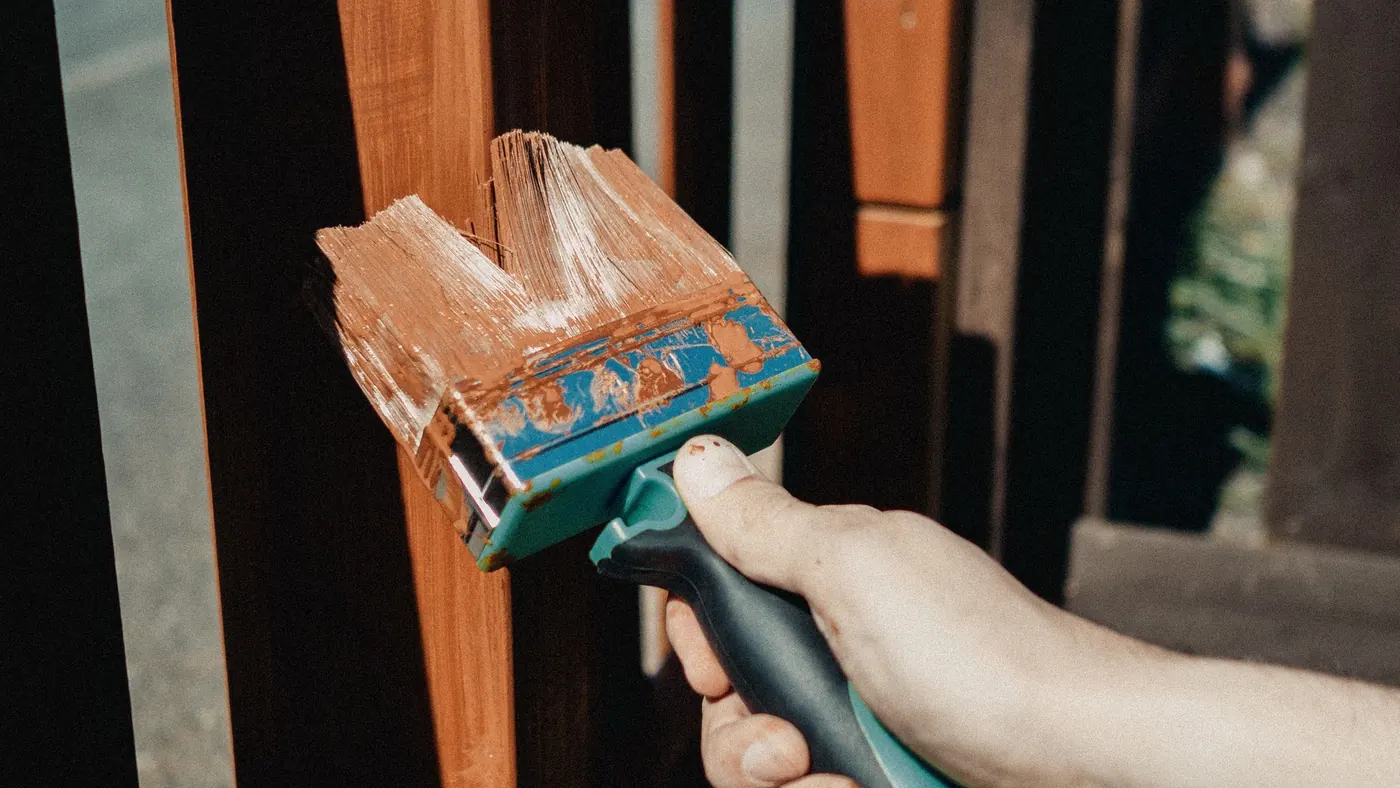
Every finish is applied thin, along the grain, with a light denib between coats. Thick coats look better for a day and worse for a decade.
Keeping it looking right
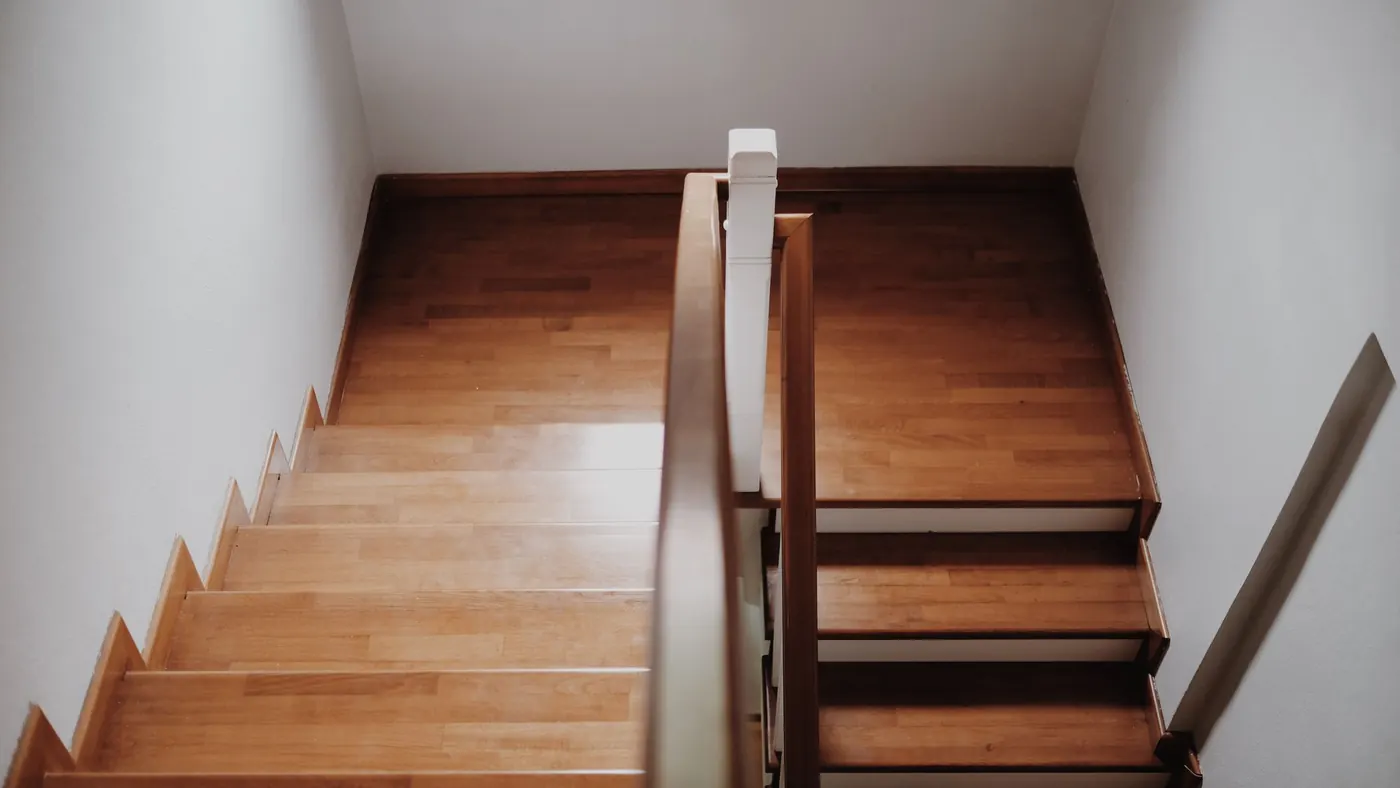
Lacquered floors: sweep grit, mop damp not wet, felt pads on chair legs, and a maintenance coat when the sheen dulls in the traffic lanes, before it wears through. Oiled floors: a wipe of maintenance oil once or twice a year. Varnished doors: wash with a mild cleaner, never a silicone polish, which makes recoating impossible later. Exterior oak: a fresh coat of oil every couple of years before it greys. Do those and a sanded and finished floor in a London house will look right for a very long time.