Interior Painting
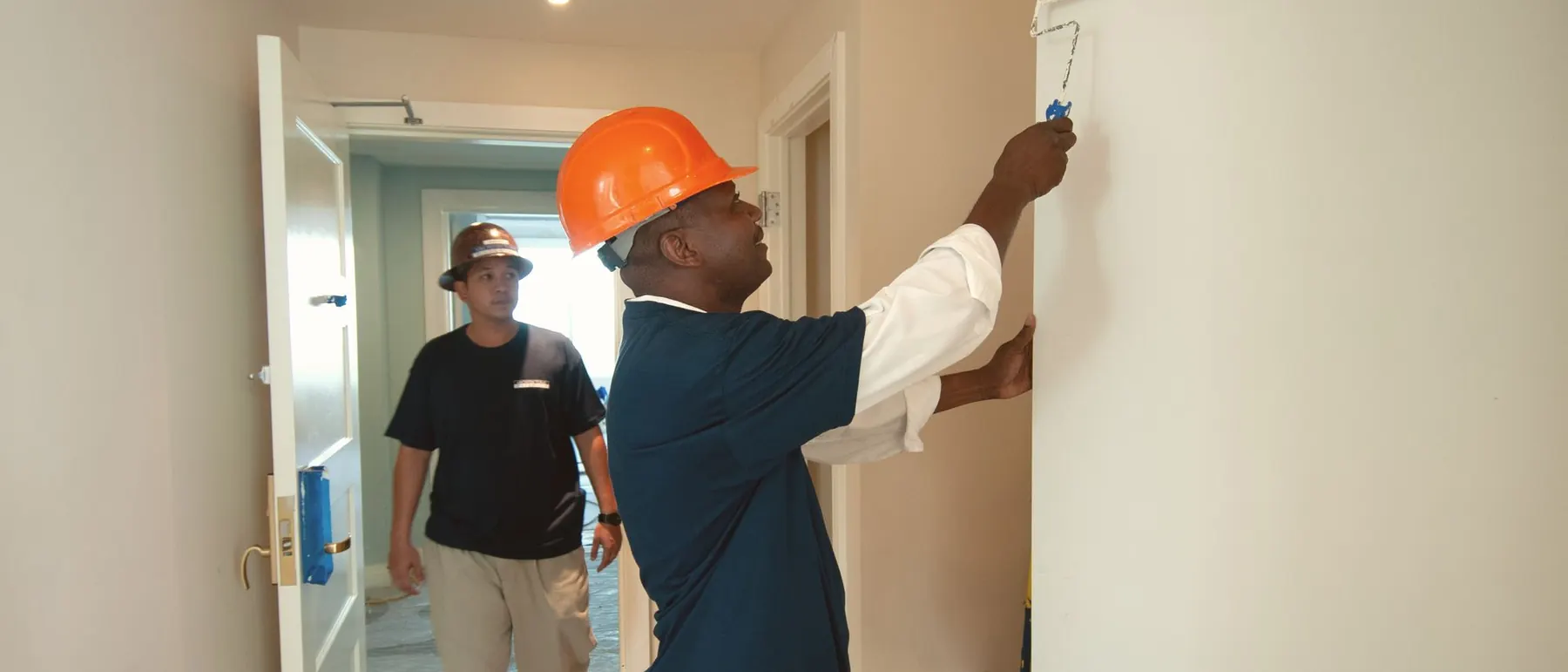
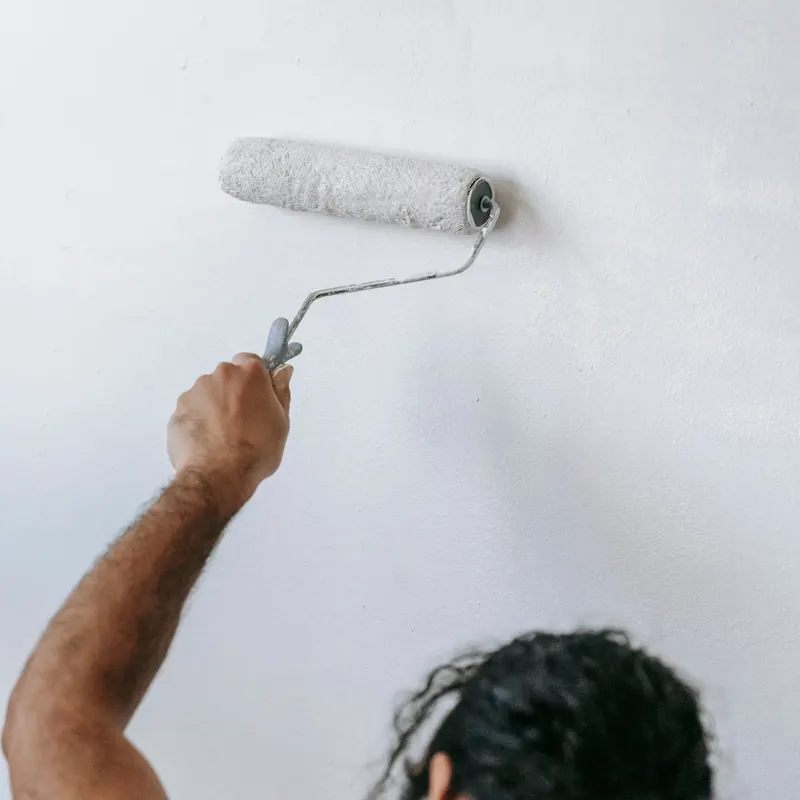
Rooms, hallways, ceilings, kitchens, bathrooms and woodwork prepared and painted in two full coats of trade paint.
Spray painting, London
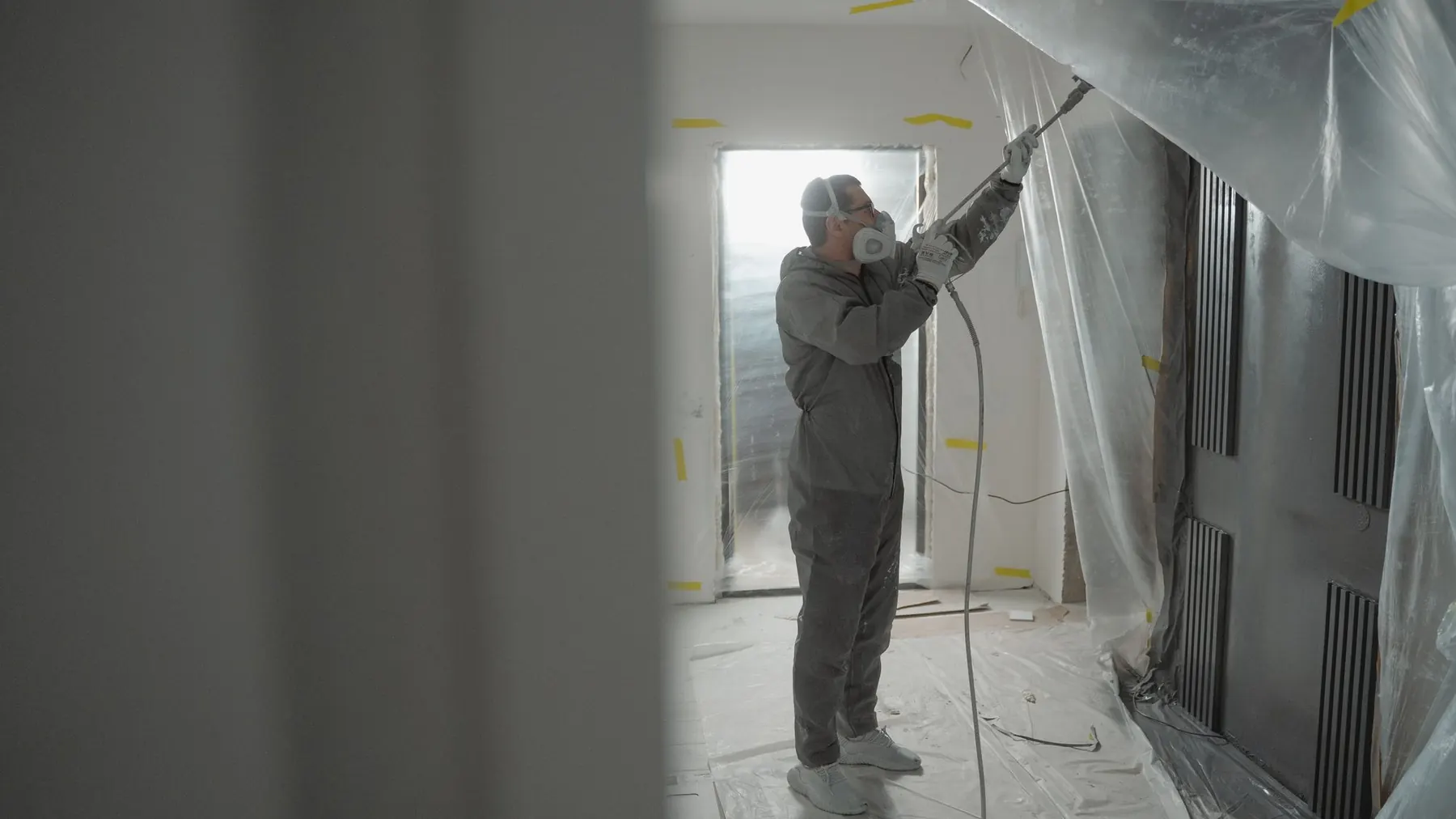
Airless and HVLP spraying lays down a thin, even film with no brush marks and no roller texture. It is the right tool for kitchen cabinets, panelled doors, radiators, furniture, shopfronts and big plain walls.
Five-star reviews from London homes
Burnt off, spliced a rotten sill, primed the same day and glossed in oil. They also told me which two frames did not need doing, which I appreciated.
GeorgeSash windows, Islington
End-of-tenancy job done in two days. Keys from the agent, neutral scheme throughout, fire door painted properly with the label left visible.
AmaraOne-bed repaint, Barking
Sanded and finished in a matt hardwax oil in a mansion flat with a strict porter. Lift protected, no smell, and the floor looks like new timber.
PatrickOak floor, City of Westminster
Yellowed white frames sprayed anthracite. They masked the glass and the brick so carefully there was nothing to clean off afterwards.
YusufuPVC frames sprayed, Brent
A grasscloth paper I was nervous about. Hung dry with no paste on the face and the seams butted, exactly as the supplier said it should be.
HelenDining room paper, London
Render, bays, fascias and the front door in one go from a tower, planned around a dry week in May. The quote said what each part would cost and it did.
DanielWhole house exterior, Sutton
Most of our spray work falls into four groups: kitchen doors and drawer fronts, internal doors and their frames, radiators and metalwork, and large plain surfaces such as ceilings in new-build flats or the walls of a shop unit. Furniture, wardrobes and built-in joinery come up often too, especially in the mansion flats of Westminster and the Victorian conversions of Islington where the original panelled doors are worth keeping.
We spray with airless equipment for big areas and HVLP (high volume, low pressure) for fine work like cabinet doors, where control and low overspray matter more than speed.
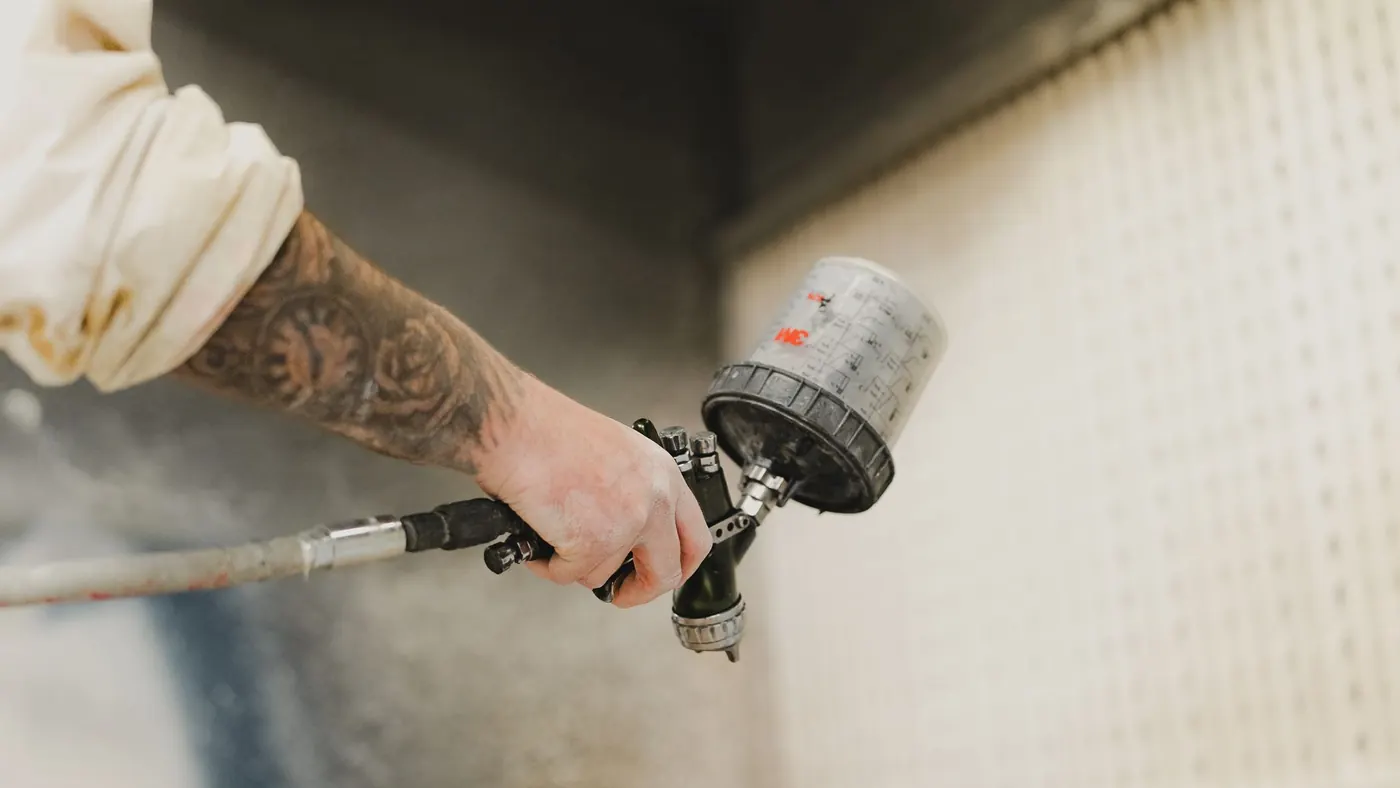
Doors and drawer fronts come off their hinges and go to the workshop, where they are sprayed flat in a dust-controlled space and cured before they are rehung. The carcasses, end panels and plinths stay in the kitchen and are sprayed in place behind full masking. That split gives the best finish on the parts you look at most and keeps the house usable.
Internal doors are usually sprayed in place, hung, with the frame and architrave done at the same time so everything matches. Radiators are removed and sprayed if they are being changed anyway, or masked and sprayed on the wall with a heat-resistant enamel if not.
A kitchen respray changes the colour and the sheen without changing the units. The sequence is: doors and handles off, everything degreased (kitchen grease is the main reason resprays fail), sanded to a key, an adhesion primer made for laminate or melamine where needed, then two to three coats of a two-pack or waterborne polyurethane lacquer. Matt, eggshell and satin are all possible; high gloss shows every flaw and needs a filler-primer stage.
Wardrobes, bookcases, chests and tables get the same treatment scaled to the piece. Where the timber is to stay visible rather than painted, a sprayed clear lacquer or varnish is often the better route.
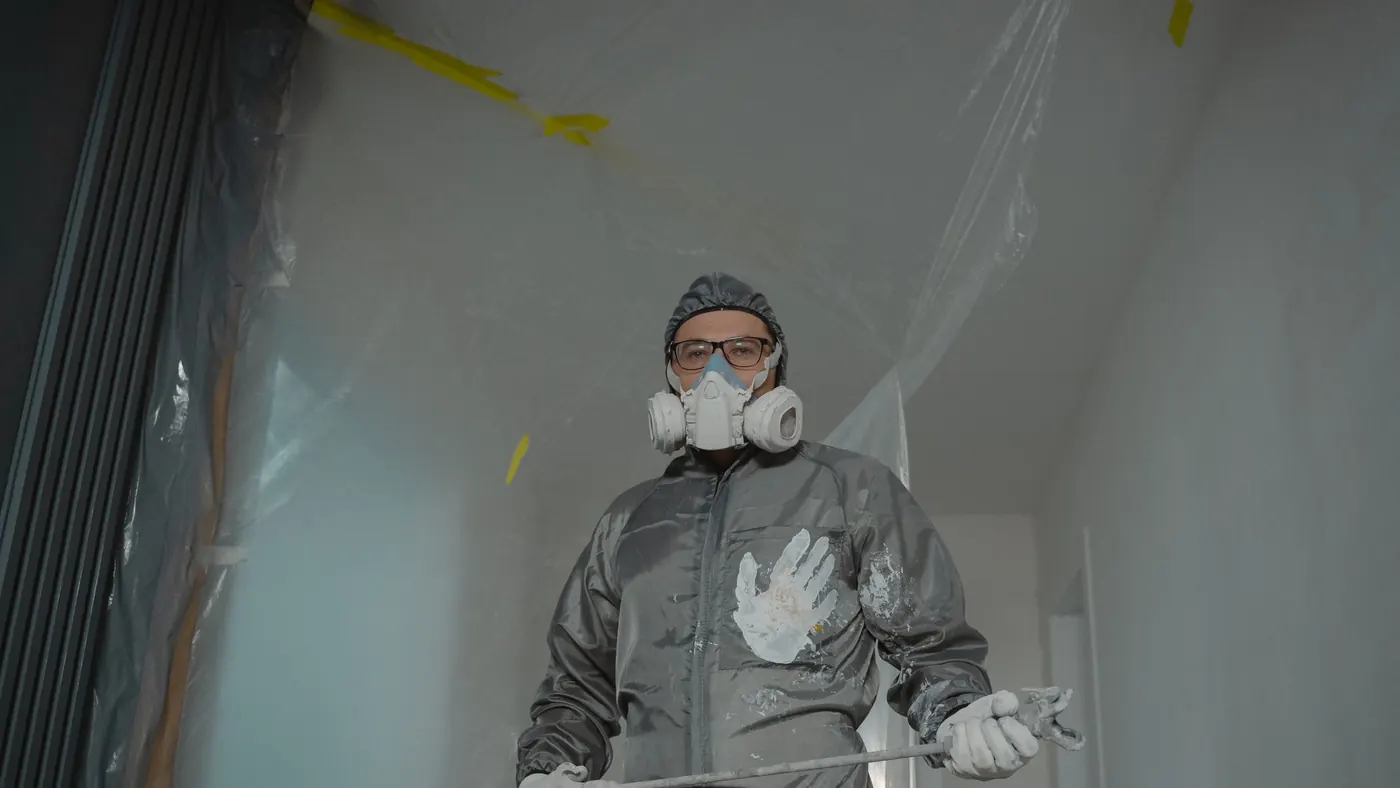
uPVC windows, doors and fascias can be sprayed rather than replaced. The surface is cleaned with a solvent, keyed lightly, then coated with a uPVC-specific paint such as Kolorbond or Zinsser AllCoat that flexes with the plastic and holds its colour. Anthracite grey on white frames is the common request. Roller shutters, metal shopfronts, garage doors and railings are sprayed with a direct-to-metal enamel after rust treatment. Most of this is commercial decorating work done out of hours so the business stays open.
| Surface | Typical primer | Typical topcoat |
|---|---|---|
| Laminate or vinyl-wrapped kitchen doors | Adhesion primer | 2-pack or waterborne PU lacquer |
| Painted timber doors | Water-based undercoat | Waterborne satin or eggshell |
| Bare hardwood furniture | Sanding sealer | Clear lacquer or tinted lacquer |
| uPVC frames | None (solvent wipe) | uPVC-specific paint |
| Radiators and steel | Zinc-rich or etch primer | Heat-resistant enamel |
| Plaster walls and ceilings | Mist coat | Airless matt emulsion |
Roughly two thirds of a spray job is masking. Every surface that is not being sprayed is covered: floors, worktops, appliances, windows, sockets, the room next door. Extraction and a respirator are used indoors. Coats are applied thin and wet, overlapped by half a pass, with the correct flash-off time between them. Overspray is controlled by tip size and pressure, not by hoping.
For a workshop respray we collect doors on day one, spray and cure them over three to five days, and rehang on the return visit while the carcasses are done in place. A typical 20 to 25 door kitchen is out of action for the in-place spraying days only. Single pieces of furniture are collected and returned within the week. Anywhere inside the London postcodes we work in is collected by van at no drama.
How it runs
Four stages, each a line on the quote. How long each takes depends on the surfaces; the sequence for spray painting never changes.
Doors counted, surfaces identified, sheen and colour agreed against a sample.
Doors and hardware off; the room masked to the last socket.
Degrease, key, adhesion primer, then two to three thin lacquer coats.
Doors cured flat, rehung and adjusted, handles refitted.

Quick Quote
Send the surfaces and the postcode. An itemised quote for the spray painting comes back by email, then a date.
On the tools
Masking, protection and the coats going on in order, photographed the way the job actually runs.
Where we work
Wherever the address sits inside the 20-mile radius, the spray painting is quoted and run the same way. These towns are one run of the list, nearest to the centre first.
Related services
Three services that tend to be booked with spray painting, either because they share the surface or because they share the scaffold. One quote covers the lot.
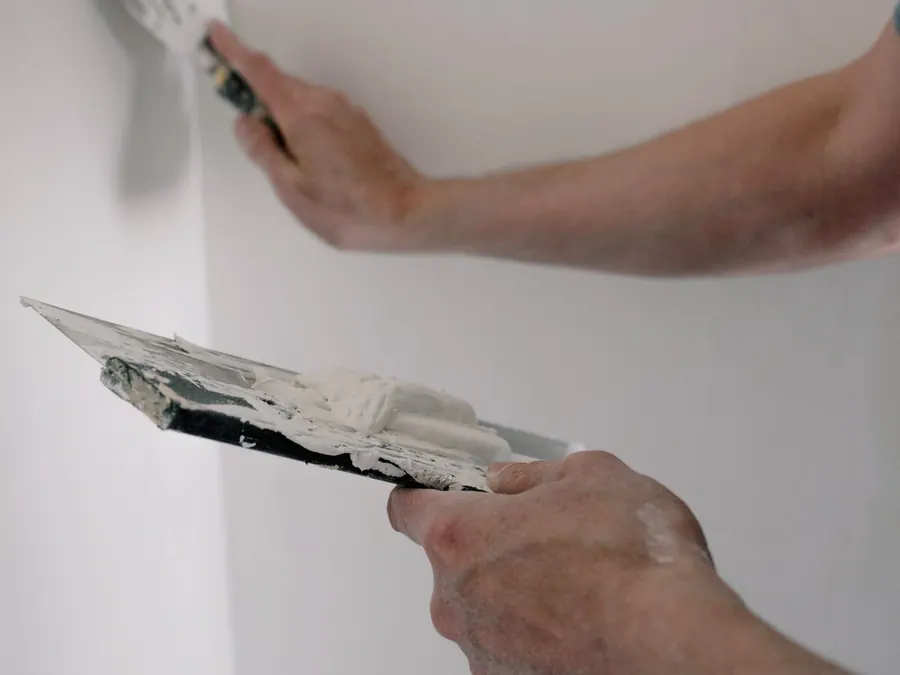
Rooms, hallways, ceilings, kitchens, bathrooms and woodwork prepared and painted in two full coats of trade paint.
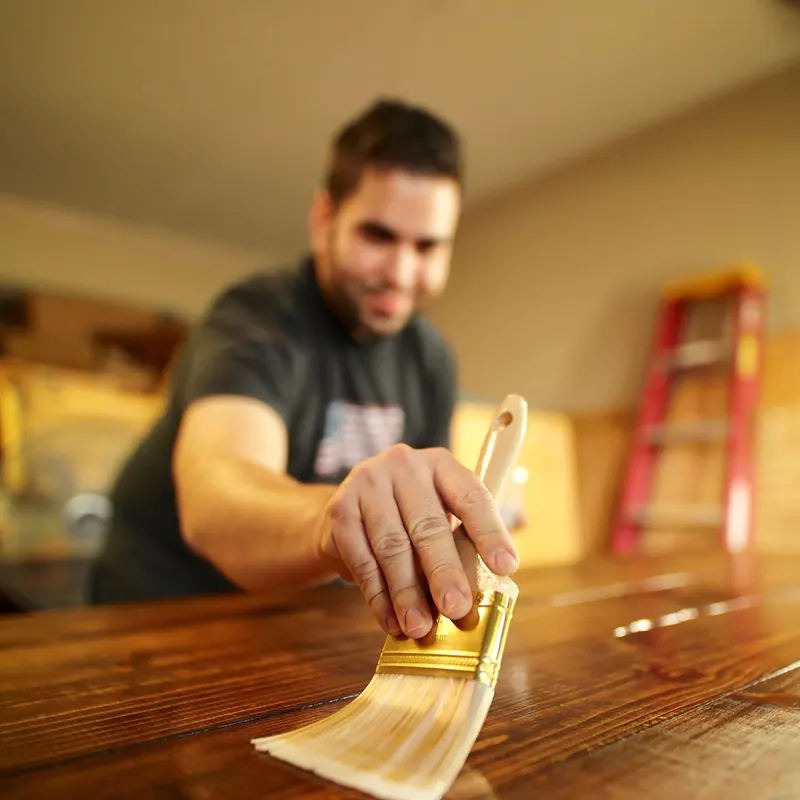
Floorboards, stairs, doors, worktops and furniture sanded and sealed in the right varnish, lacquer or oil.
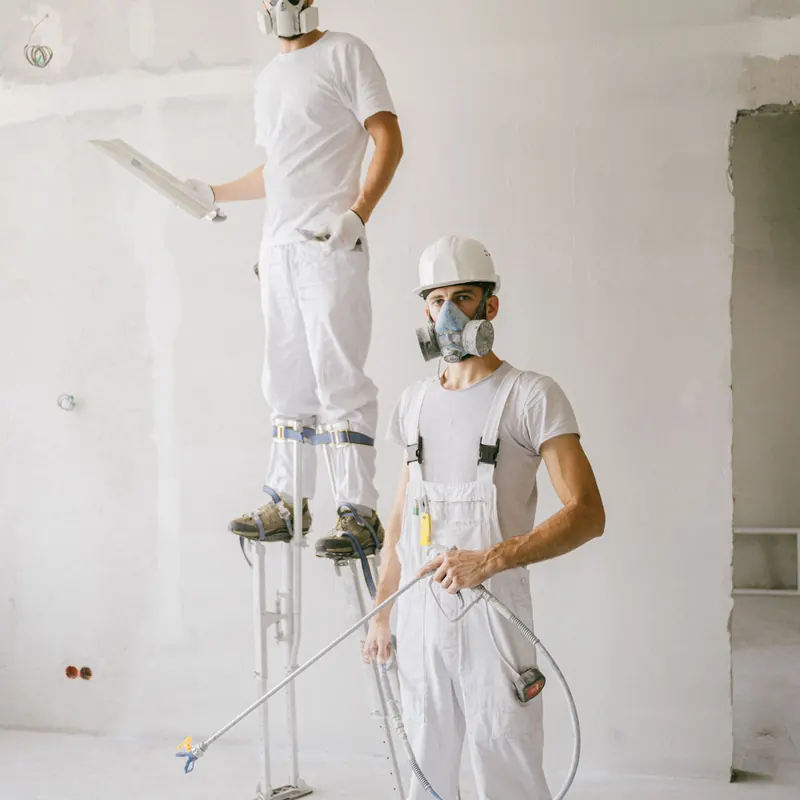
Shops, offices, restaurants, communal areas and rental blocks decorated out of hours with durable trade coatings.
Questions
Anything not covered here is answered by email through the contact page, and the longer answers live in our decorating guides.
With a proper degrease, adhesion primer and a polyurethane lacquer, a sprayed kitchen should look good for many years of normal use. The weak points are always around the hob and sink, so we build the film up there and use a wipe-clean sheen.
Yes. uPVC is cleaned with a solvent, lightly keyed and sprayed with a paint made to bond to plastic. Anthracite, black and sage green are the usual colours. The frames should be sound; spraying does not fix failed seals or discoloured glass units.
The spraying itself is contained by masking and extraction. The mess is in the preparation: sheeting, taping and covering everything in the room. When we strip the masking there is no overspray on anything that was not meant to be painted.
For empty rooms, new-build flats and commercial spaces, yes, with an airless unit. In a furnished home, rolling is usually quicker once the masking time is counted, so we advise on which makes sense.
Small pieces and fitted wardrobes are sprayed in place inside a sheeted enclosure. Loose doors, drawer fronts and free-standing furniture go to the workshop for a better finish and come back within the week.
From the archive
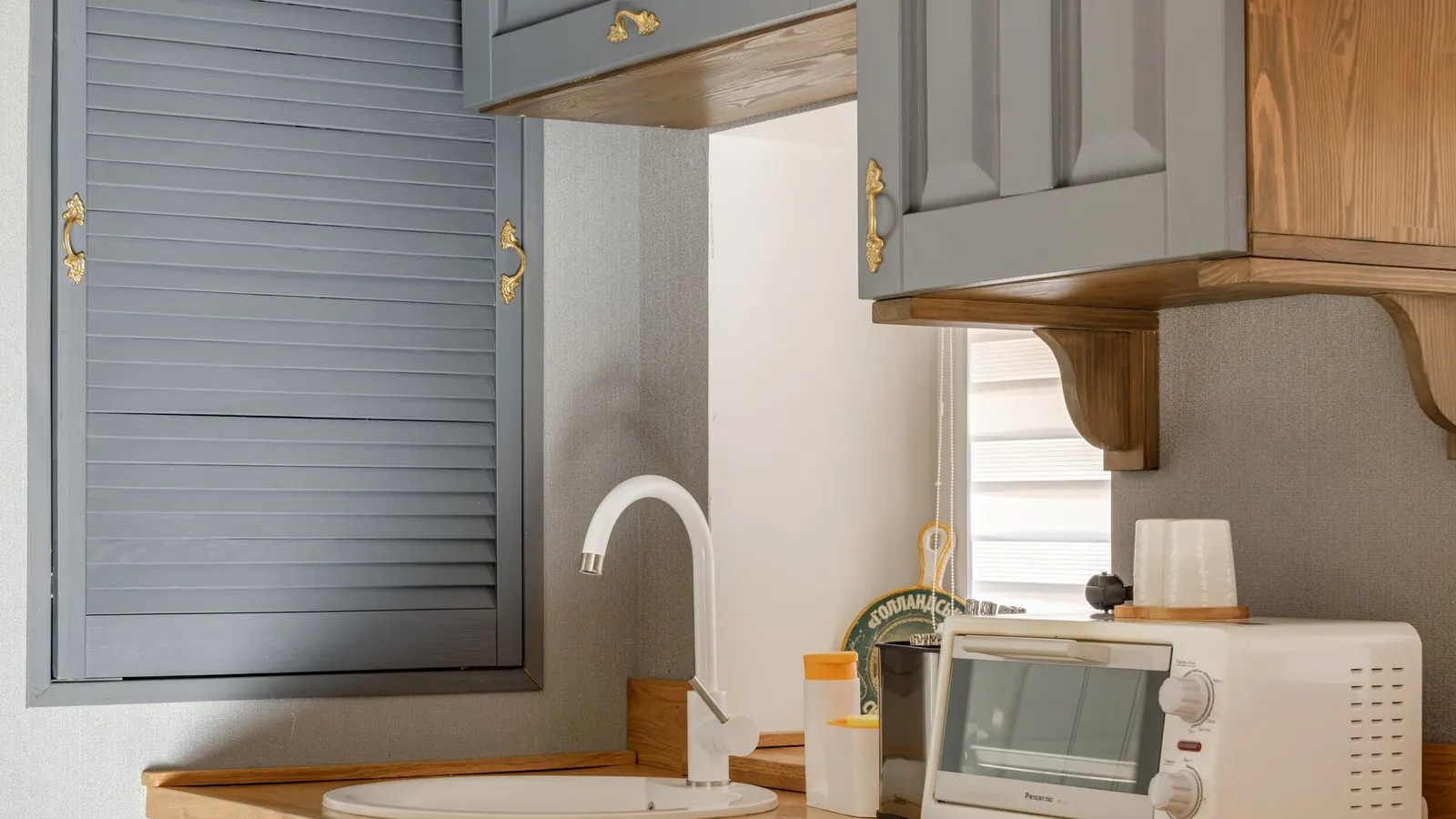
A sprayed kitchen is the most cost-effective transformation in a flat, and also the easiest to get wrong. Here is the process the way a decorator runs it, so you know what to expect and what to ask.
Quick Quote
Five-star reviews from London homes
Describe the spray painting you need and where it is. The quote comes back by email with the preparation, the coats and the products listed.