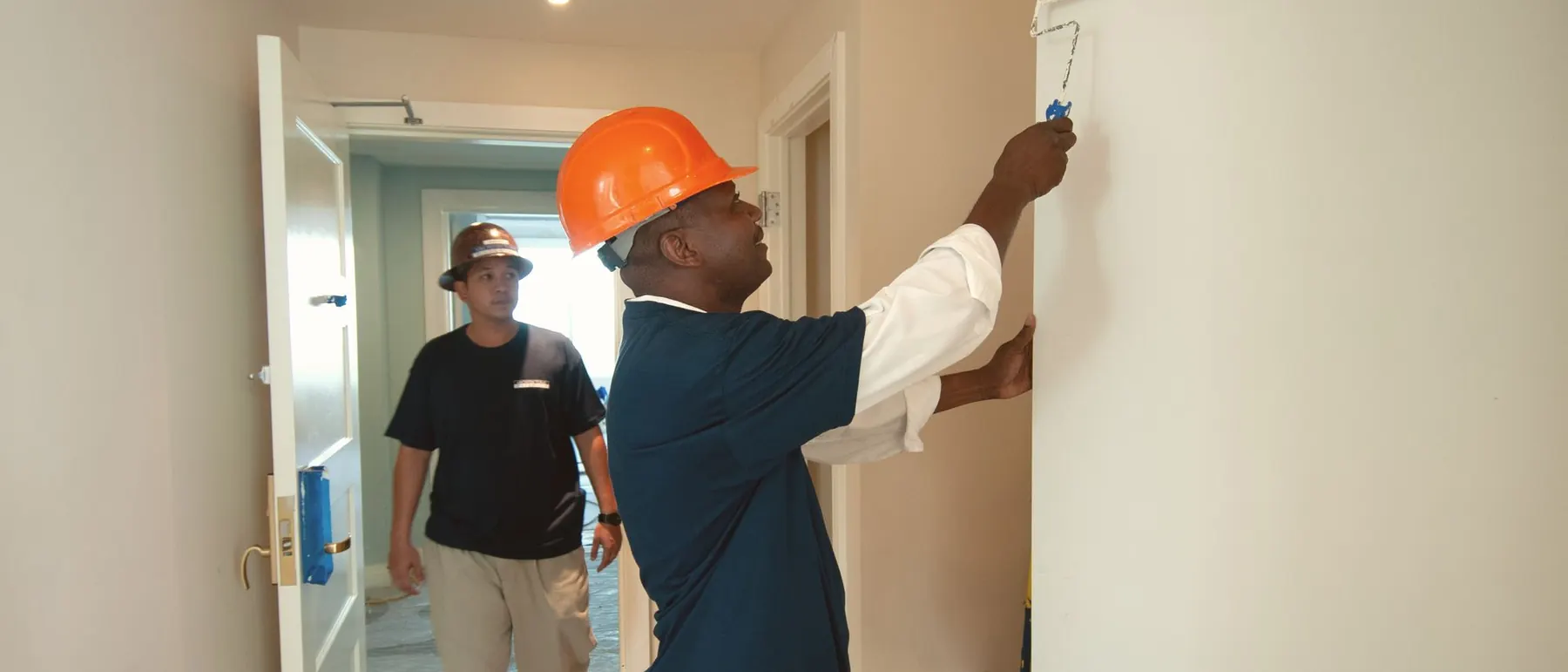
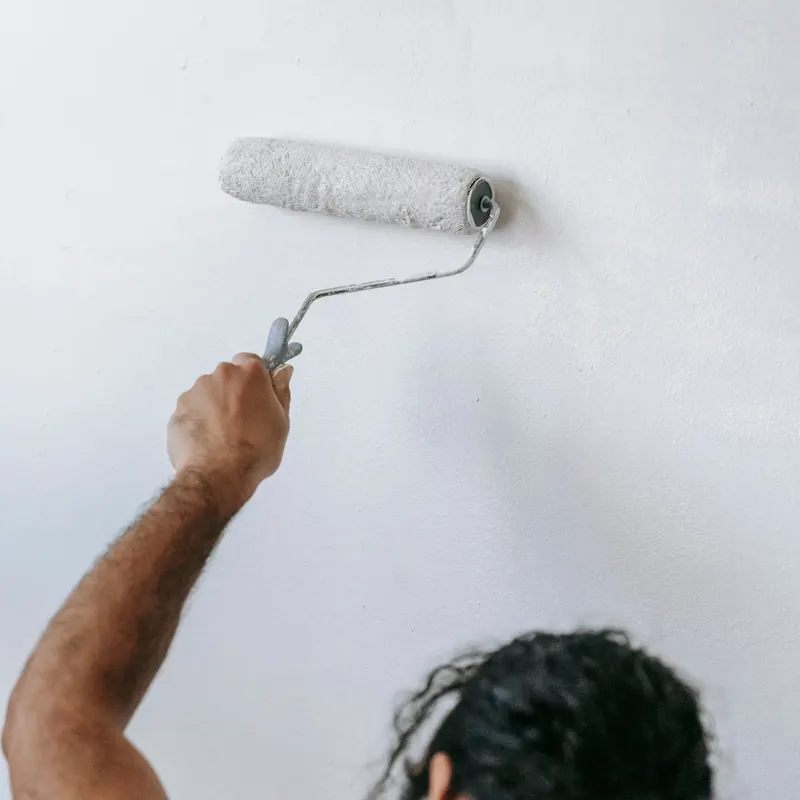
Interior Painting
Rooms, hallways, ceilings, kitchens, bathrooms and woodwork prepared and painted in two full coats of trade paint.
Wallpapering, London
Feature walls, full rooms, hallways with a three-storey drop, and stairwells. Traditional pasted papers, paste-the-wall, wide-width murals and lining paper under paint. Walls made ready first, seams flat, pattern lined up across the chimney breast.
Five-star reviews from London homes
Painted the shop over two nights so we never closed. The shutters were sprayed too and the sign-writer had a clean wall to work on.
BenShop unit, Brent
They warned me pebbledash drinks paint and quoted three coats, not two. The front is even all over now, no grey showing between the stones.
CharlottePebbledash semi, Sutton
Three-storey stairwell with a big repeat. They built a platform in the well and the pattern runs straight round the landing. Not a seam showing.
RaviStairwell wallpaper, Archway
Artex ceiling in the lounge sealed and skimmed rather than scraped, left to dry a week, then painted. Flat as a board and no mess in the rest of the house.
LouiseCeiling skim and paint, Bexley
Burnt off, spliced a rotten sill, primed the same day and glossed in oil. They also told me which two frames did not need doing, which I appreciated.
GeorgeSash windows, Islington
End-of-tenancy job done in two days. Keys from the agent, neutral scheme throughout, fire door painted properly with the label left visible.
AmaraOne-bed repaint, Barking
The commonest job is a feature wall behind a bed or a sofa, or a chimney breast, in a paper the customer has already fallen for. Then whole rooms, usually dining rooms, studies and downstairs loos. Hallways, stairs and landings are the technical ones: long drops, angled cuts at the string of the stairs, and paper that has to line up across a landing you cannot see at once. We hang all of it, and we say at the survey how many rolls you actually need so you are not caught short of a batch number.
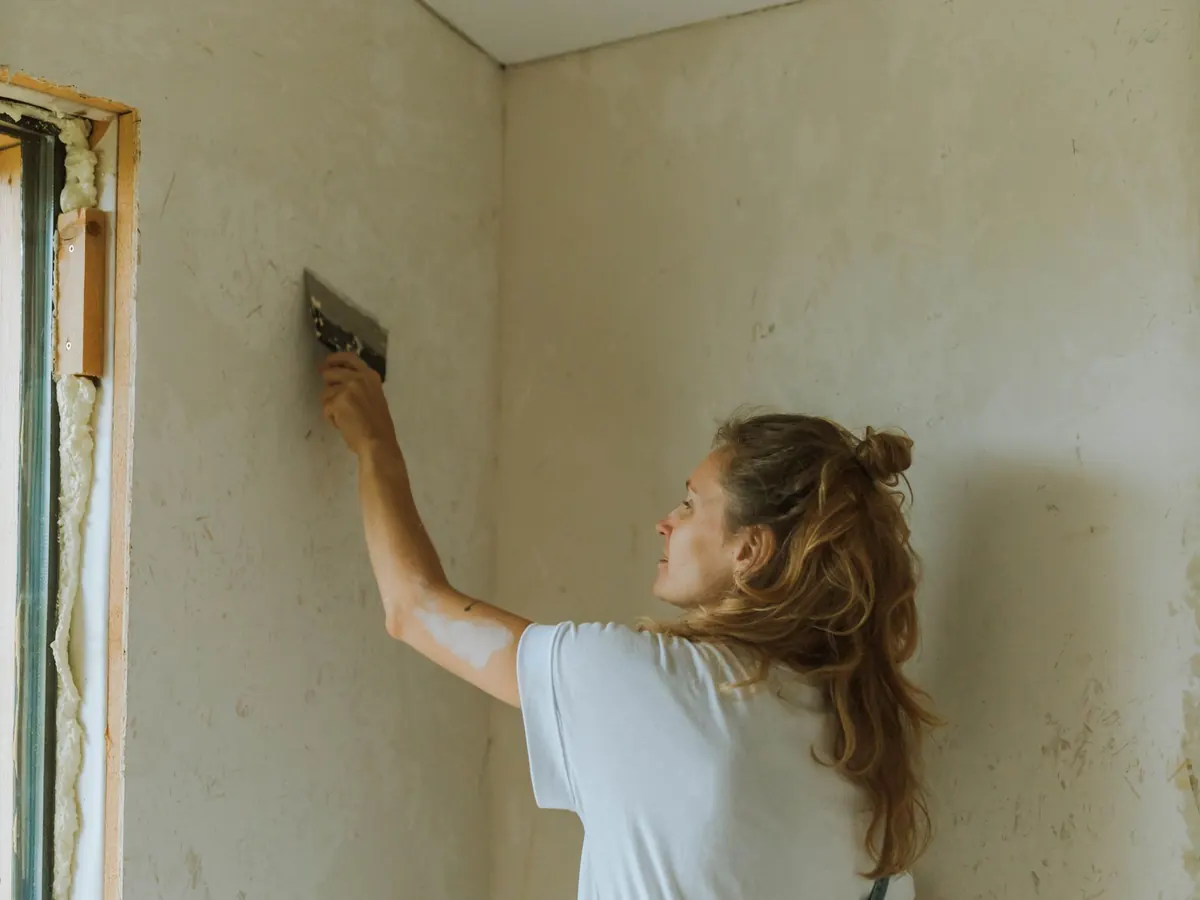
Walls that are badly cracked or uneven go to the plastering team to be skimmed first; paper hides nothing, it just makes ridges.
Wallpapering is available across all the London areas we work in. In the period houses of Islington and Archway the walls are usually out of true and need lining; in newer flats in Barking and Brent the plaster is flat but the ceilings are low, which changes where the pattern is centred; in Westminster mansion blocks the ceilings are high and the drops are long. We plan the layout on the wall with you before cutting anything.
How it runs
The order does not change from job to job. What changes is how much of each stage your surfaces need, and the quote says so.
Rolls calculated from the repeat, batch numbers checked, layout agreed.
Old paper off, walls filled, sanded and sized; lined if the plaster is rough.
Plumb first drop, pattern centred, each drop matched, trimmed and rolled.
Sockets refitted, paste cleaned off, paper checked in daylight for lifts.


Quick Quote
One message with the sizes and the state of the surfaces is enough. The quote names the stages and the products.
On the tools
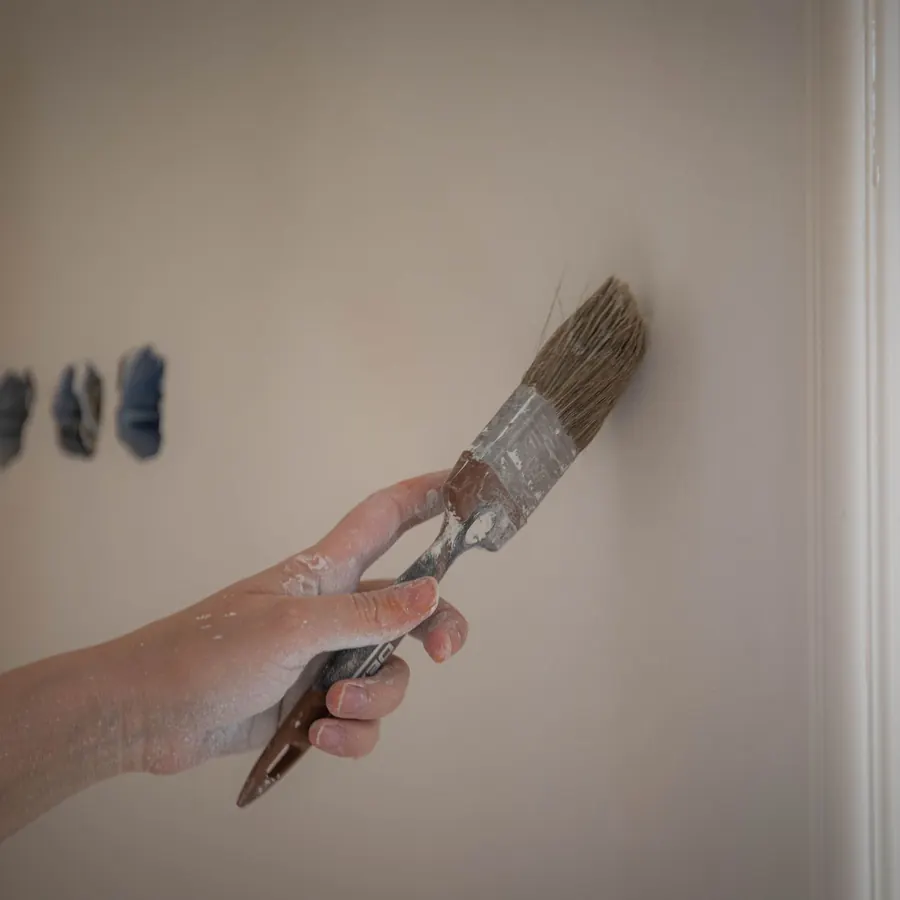
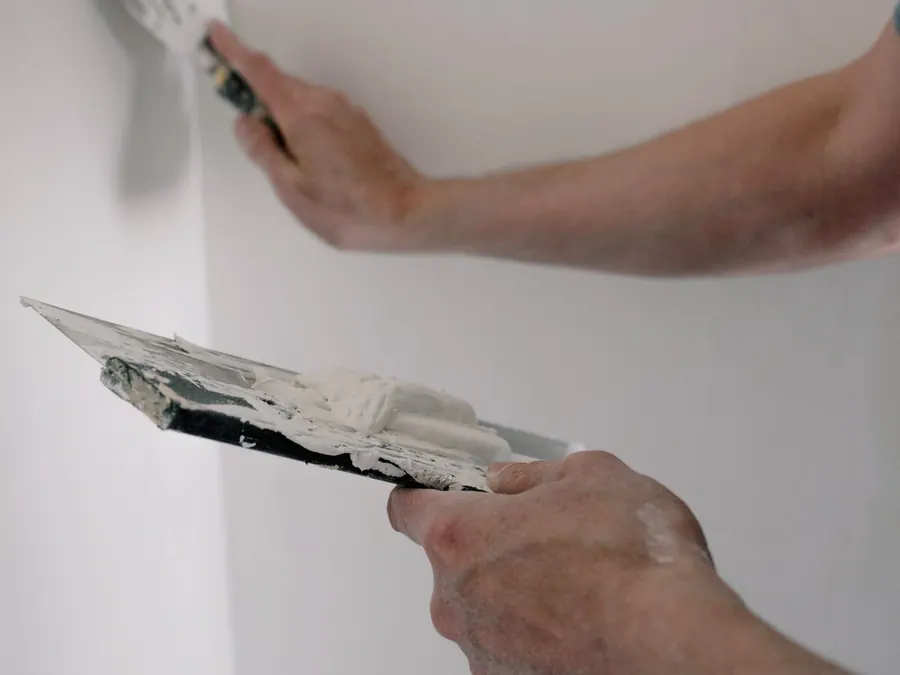
The unglamorous middle of a job, where the finish is decided, and the last coat that shows it.
Where we work
The base is London and the coverage runs out to roughly 20 miles, so wallpapering jobs in the central boroughs, the outer suburbs and the towns just past the boundary are all normal work. A run of the towns covered, ordered by distance from the centre:
Related services
Three services that tend to be booked with wallpapering, either because they share the surface or because they share the scaffold. One quote covers the lot.
Rooms, hallways, ceilings, kitchens, bathrooms and woodwork prepared and painted in two full coats of trade paint.
Whole homes, flats and single rooms decorated end to end: walls, ceilings, woodwork, wallpaper and exteriors.
Skimming, reboarding, patch repairs and full re-plastering of walls and ceilings, painted by the same team once dry.
Questions
Anything not covered here is answered by email through the contact page, and the longer answers live in our decorating guides.
It depends on the wall size, the roll size and the pattern repeat, which is why we measure and calculate it rather than guess. A large repeat can waste a third of every roll. We also check that every roll is the same batch number so the colour matches.
On smooth, sound plaster a modern non-woven paper does not need lining. On old, filled or slightly uneven walls a 1000 or 1400 grade lining paper hung horizontally gives a much better finish and is worth the extra day.
Yes. It needs a tower or staging in the well, long drops cut to the angle of the stairs, and the pattern carried round the landing. It is the hardest wallpapering job in a house and one we do often in London terraces.
Yes. The paper is steamed off, the paste washed away, and the wall filled, sanded and sealed. Old walls that have been papered for decades often need lining paper or a skim before they will look right painted.
The pattern is centred on the chimney breast first so the focal point is symmetrical, then worked outwards. Internal corners are never wrapped; the paper is cut, turned a few millimetres and the next drop overlapped plumb, so a wall that leans does not throw the pattern off.
Quick Quote
Five-star reviews from London homes
What needs wallpapering, roughly how big it is, and what state it is in now. That is enough for a written quote; a visit is booked for anything bigger.