

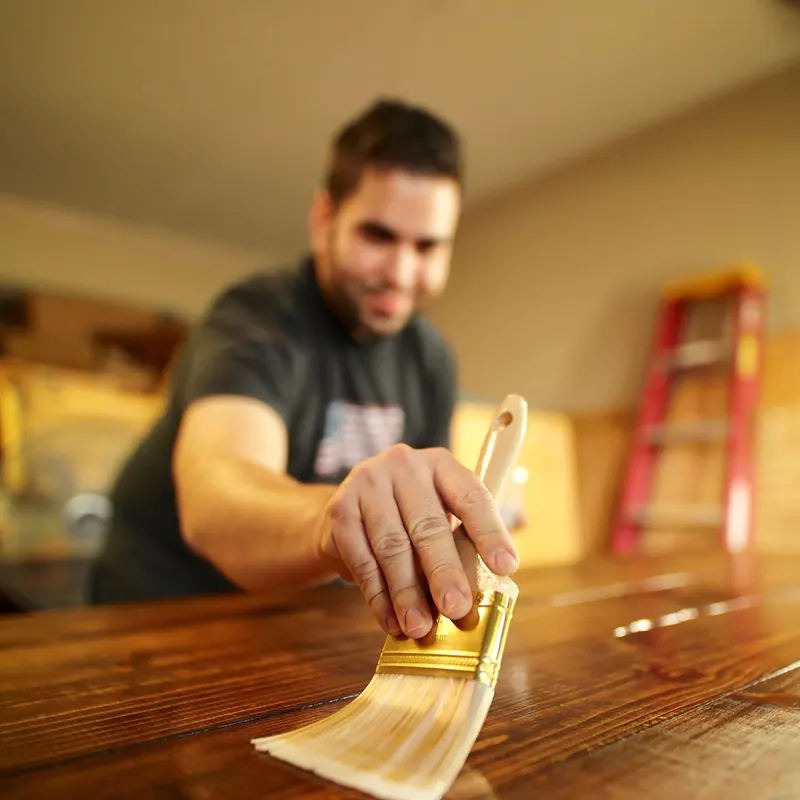
Varnishing
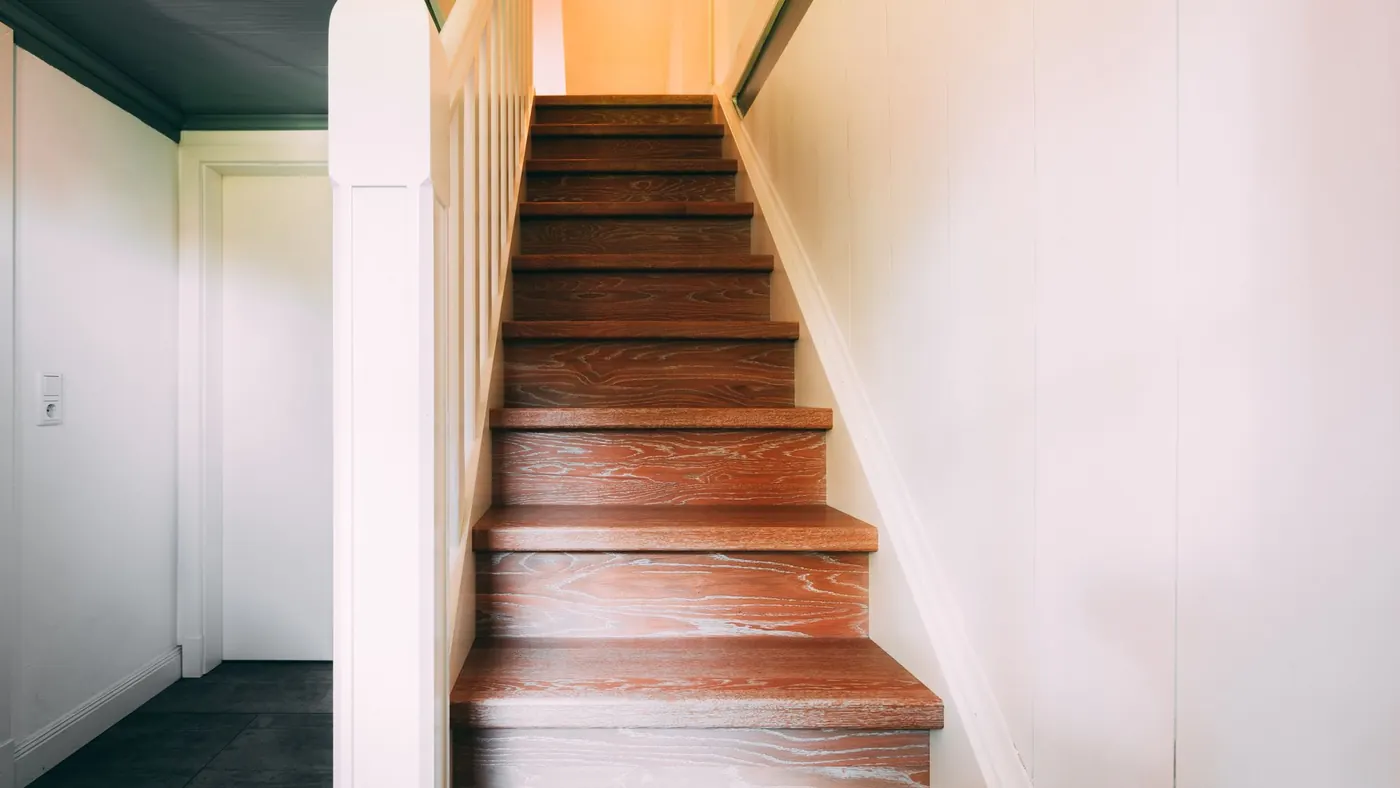
Floorboards, stairs, doors, worktops and furniture sanded and sealed in the right varnish, lacquer or oil.
Wood staining, London
Floorboards, doors, staircases, skirting, sash windows, fences and decking. A stain colours the wood and lets the grain show; a treatment protects it. We do both, and match colours on an offcut before touching the real thing.
Five-star reviews from London homes
Twenty desks worth of office painted over a weekend, RAMS supplied on the Tuesday before. Monday morning it was open and smelt of nothing.
NadiaOffice repaint, Islington
Four flats sharing the cost and they split the invoice for us. Ceiling scrimmed and skimmed, walls lined, spindles in satin. Everyone is happy, which is rare.
OliverCommunal hallway, Archway
Cupboard doors went away to be sprayed while the walls were done in a wipeable matt. Back in the same week and the colour matches the sample they sent.
GraceKitchen and utility, Bexley
Door stripped back, primed and finished in an oil gloss, railings wire-brushed and blacked. It is the only front on the street that looks looked after.
SamuelFront door and railings, London
Sloping ceilings, a Velux and a lot of new plaster. Mist coated first so the top coats did not flash, and the edges along the sloping ceiling are dead straight.
FatimaLoft room, Islington
They filled every hairline crack before a drop of paint went on, which is why the ceiling still looks flat under the big window.
HannahTwo bedrooms and a landing, Islington
A floor stain job in a London terrace starts with sanding back to bare timber, because stain will not take evenly through old varnish or wax. Boards are nailed down, gaps filled with a resin and sawdust mix if you want them closed, and the floor is sanded through three or four grits to 120. The stain is then applied along the grain by pad or brush, wiped back to even it, and left to dry. Two coats deepen the colour. The floor is then sealed with a lacquer or oil, which is where floor varnishing and lacquering takes over.

Preparation decides whether the stain looks even or blotchy. Pine is a blotch-prone timber; it drinks stain unevenly where the grain changes, so we use a pre-stain conditioner or a gel stain on pine to control that. Fillers must be colour matched because they take stain differently from the wood around them. Any glue, paint splashes or old finish left behind will show as a pale patch, so the sanding is thorough, and we vacuum and tack-cloth before the first coat.
Stain colour depends on the timber under it. A mid oak stain on pine and on real oak will look like two different colours. So we always make up a sample on an offcut of the actual floor or door, with the intended sealer on top, and let you see it in daylight before committing. Water-based stains (Morrells, Fiddes, Osmo) give clean colour and dry fast; oil-based stains penetrate deeper and are easier to blend on large areas; hardwax oils combine colour and protection in one product for floors and worktops.
A stain on its own has almost no wear resistance. It needs a sealer. Floors get two or three coats of a water-based polyurethane lacquer or a hardwax oil; doors and skirting get a satin or matt clear coat; exterior timber gets a stain-preserver that is its own protection. The sheen you choose changes the colour: gloss darkens and warms, matt keeps it closer to the sample.
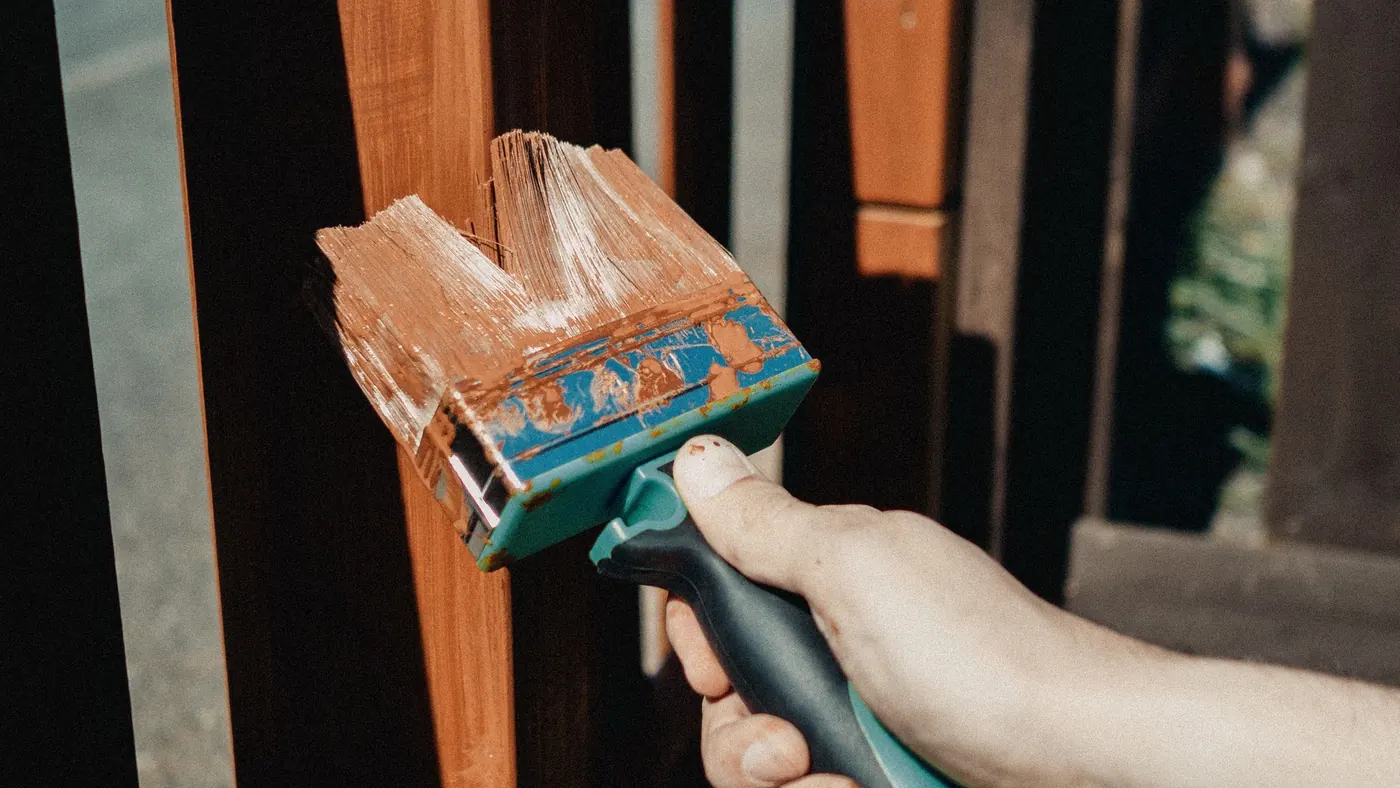
Water-based stains are dry in a couple of hours; oil-based need overnight. Each lacquer coat wants four to six hours and a light sand between coats. A standard 15 square metre bedroom floor, sanded, stained and lacquered, is three days with the room clear. Exterior fence and deck staining is a one to two day job in dry weather above 10 degrees. Interior woodwork painting, which we do at the same time where skirting or frames are to be painted rather than stained, adds a day per room for undercoat and gloss.
Alongside homes we stain and seal floors in shops, cafes, offices and communal hallways, usually overnight or over a weekend so the space opens on time. Commercial floors get a heavier-duty two-pack lacquer. Where a whole house is being decorated, staining fits into the sequence after plastering and before final painting, and we plan it that way as part of a full painter and decorator job.
How it runs
This is the shape of every wood staining job we take on. The survey sets the quote, the quote sets the days, the days run in this order.
Stain and sealer tested on an offcut of the actual timber, seen in daylight.
Back to bare wood through the grits; pine conditioned to stop blotching.
Applied with the grain, wiped back, second coat where the colour needs depth.
Lacquer, oil or preserver in two to three coats, light sand between.

Quick Quote
Describe the job and where it is. The reply is a written price with the stages listed, or a time to come and look.
On the tools
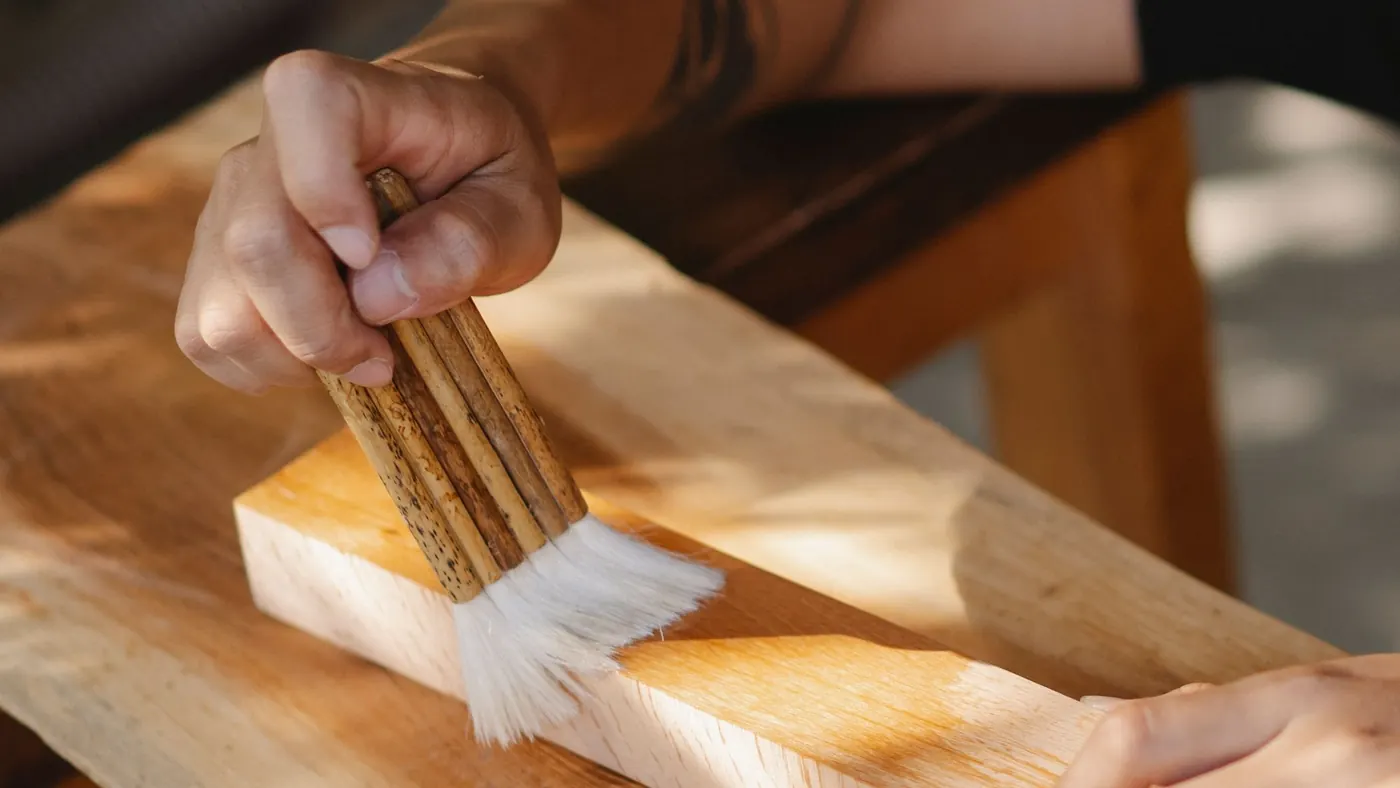
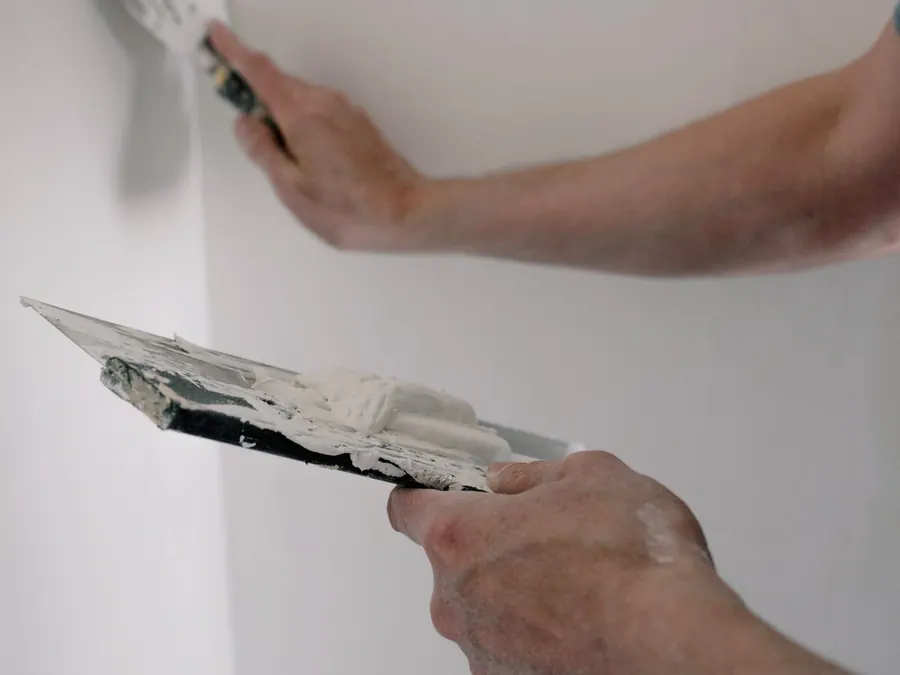
The unglamorous middle of a job, where the finish is decided, and the last coat that shows it.
Where we work
The base is London and the coverage runs out to roughly 20 miles, so wood staining jobs in the central boroughs, the outer suburbs and the towns just past the boundary are all normal work. A run of the towns covered, ordered by distance from the centre:
The full list of 90 towns, with distances, is on the areas we cover page.
Related services
When wood staining is only part of the job, these are usually the other parts. They are sequenced together so the finished work is never worked over.
Floorboards, stairs, doors, worktops and furniture sanded and sealed in the right varnish, lacquer or oil.
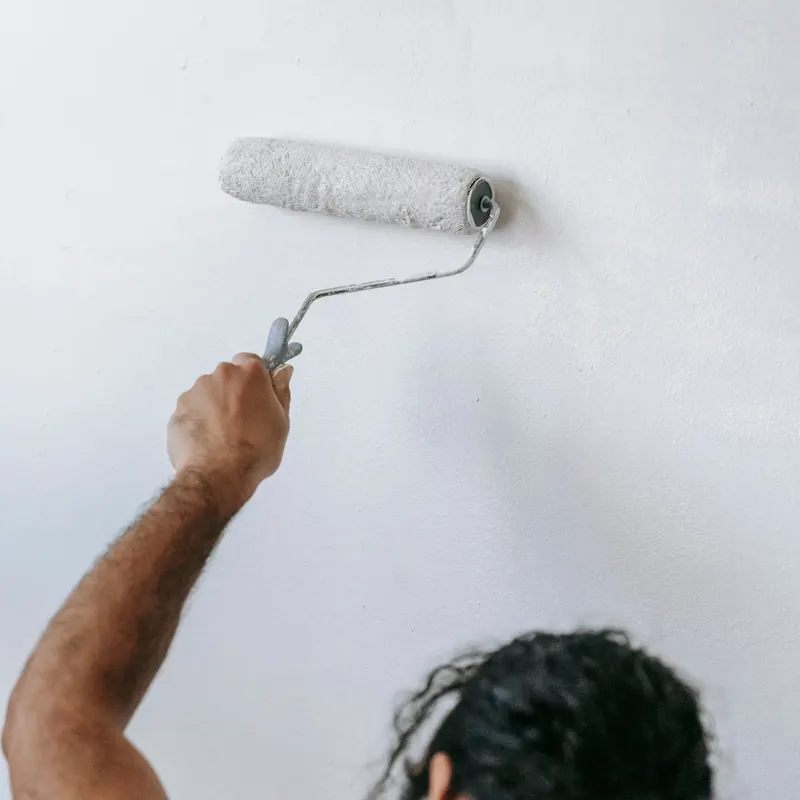
Rooms, hallways, ceilings, kitchens, bathrooms and woodwork prepared and painted in two full coats of trade paint.

The full front of the house: windows, doors, fascias, railings and rendered walls painted to shed the weather.
Questions
Anything not covered here is answered by email through the contact page, and the longer answers live in our decorating guides.
Close to it. Pine takes stain unevenly, so we use a conditioner or gel stain and build the colour in two coats. The grain pattern stays pine, but the tone can be matched to an oak sample and most people cannot tell across a room.
A stain changes the colour and lets the grain show. A treatment or preserver protects against rot, insects and weather, and may or may not add colour. Exterior products often do both in one tin; interior floors need a stain plus a separate sealer.
Yes. Decking is cleaned, allowed to dry, and given two coats of a decking stain or oil in dry weather. Fences get a spirit or water-based fence stain by brush or sprayer. Spring and early autumn are the best times in London.
Lighter to darker, yes, with a light sand and a darker stain. Darker to lighter means sanding back to bare wood again, which takes a couple of millimetres off the boards, so we advise going a shade lighter than you think first time.
Yes. Skirting, architraves, doors, spindles and window frames are painted with a water-based or oil-based undercoat and satin or gloss finish as part of most decorating jobs. We will tell you which timber is worth staining and which is better painted.
From the archive

Stain gives colour. Varnish, lacquer and oil give protection. Most jobs need one of each, and the pairing decides how the timber looks in five years. This guide sorts them out.
Quick Quote
Five-star reviews from London homes
Six fields and the job is in the diary to be priced. Room sizes and the state of the walls and woodwork go in the last box.